
This blog is based on the book “MS & Radha: Saga of Steadfast Devotion”, gifted to me by my friend, Anant. Before he gave me this book, I was oblivious to Carnatic music and the music goddess MS Subbulakshmi.
Born and brought up in Madhurai, MS (as she is affectionately known), grew up in a rigorous and orthodox atmosphere. “We were poor, but rich in music,” MS said once. 
At a very early age, it was not just singing that came naturally; she absorbed music like a blotting paper. It is pretty interesting to know that as a child when her family couldn’t afford radio, her neighbor used to play Marathi Bhajans (Marathi devotional songs) and she picked it up just by listening, and practiced it until she perfected her pronunciation.
MS, from an early age, was exposed to concert music and musicians who came to Madhurai to give concerts. They rarely left without greeting Shanmukhavadivu, MS’s mother, a Veena player.
MS was married to T Sathashivam, a freedom fighter. He was more concerned with the destiny of the nation than personal advantage. Sathashivam was extremely caring and was dedicated to providing the best prospects to MS. He was also short tempered, especially when anyone questioned or disrespected MS, himself or music. MS always gave all the credit for her success to her husband.
“I am indebted to him…ignoring his own comforts and conveniences he has labored day and night to bring me name and fame.”
Due to his political involvement, MS was able to have an audience of the whos who of the political scenario at that time, including Mohandas Gandhi and Jawaharlal Nehru. Perhaps it was Subbulakshmi’s good fortune that the right people came into her life at the right time, and MS was soon a national icon and an international celebrity.
During the Indian freedom struggle, MS’s music was not just entertainment; it stroked the idea of truth, spirituality, patriotism, sacrifice, compassion, ahimsa (non-violence) & aparigraha (to give away/ tyag).
The book is filled with remarkable heartwarming stories of her life, which will amaze you. For example, Once during the studio recording of Meera’s songs in Bombay, a skinny girl with twin plaits heard Subbulakshmi for the first time & refused to record after her, “not today, not after that” she breathed. That girl was Lata Mangeshkar.
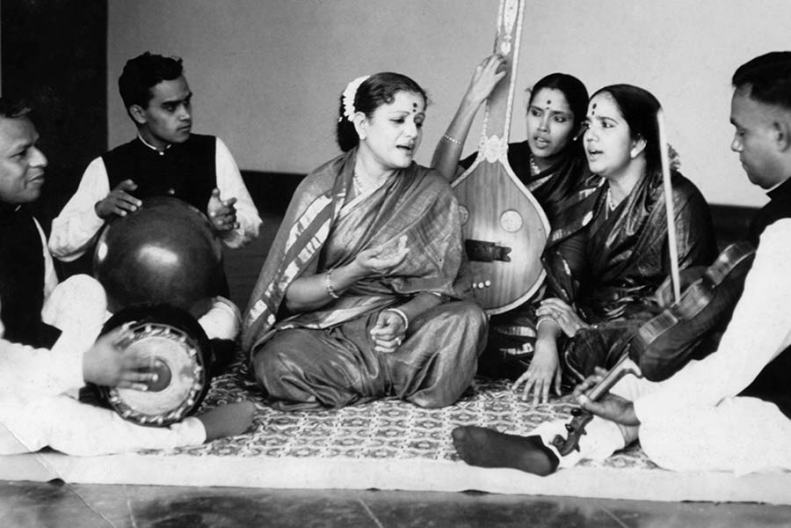 MS wasn’t only a singer; she was devoted to music.
“Even if the mother forgets the child, and the child forgets the mother who bore it,
Even if life forsakes the body & the body forsakes the soul,
Even if the heart abandons the art it had absorbed & eye fails to blink,
I shall not forget the lord who resides within pure souls.”
These are the lines from one of her signature Tamil songs, and it is an appropriate example to show that for MS, music was like worshipping god, and she was devoted to it. For her, even at the age of 81 years, every concert was an examination for which she practiced with sincerity.
She would deliver the most complex performances with demonic practice and incredible memory. MS invariably condemned looking at the written lyrics while singing; she felt it was an insult to the composer. “How can you experience the feeling of the verse if you are unsure of the words?”
For her, performance was not the end of music; it was merely an outward manifestation of a long internalization process whereby melody & meaning became a part of the singer’s psyche.
To MS, every audience was important, once two villages walked 20 miles but arrived too late for the concert when they knocked at the door; despite being tired, she made them sit and sang for them with the same shraddha.
She treated the drivers of VIPs who visited her place with equal respect and were served the same food. She donated all the wealth she earned to charity and kept only seven saris in her wardrobe.
Awards and honours of every kind rained upon MS throughout her life, yet she remained unchanged and untouched by all that adulation. It is funny how she was afraid of cockroaches and lizards and never slept without beaming her torch on the ceiling to check if a lizard had strayed in, yet how perfectly she performed in front of thousands of people. MS was docile and brought up in a rigorous environment, yet she did not hesitate in making strong decisions, despite stren disagreement with family.
At the same time, she would surrender to her husband and despite all the fame and honour she earned, never did she forego her household duties. She was able to raise four kids very lovingly and did all the household chores.
This book is filled with pictures of her life, which makes it an interesting read. It has taught me so many things, life skills, morals, innocence, childlike devotion and a lot more. And now I am off to listening to MS Subbulakshmi’s songs on YouTube.

 Contemporology