
Introduction
James McBride’s The Heaven & Earth Grocery Store is set in 1920s Chicken Hill of Pottstown, Pennsylvania. The novel explores interaction between Jews, African-Americans, and the Ku Klux Klan. Interestingly, McBride started writing this book in the late 1970s when he worked as a counselor at Variety Club Camp for Handicapped Children in Worcester, Massachusetts. His experiences were so profound, he dedicated the book to Sy Friend, the retired director of the Camp, who taught everyone the meaning of ‘Tikkum Olam,‘ a Hebrew phrase meaning “world repair.” This concept, synonymous with pursuing social justice in modern Jewish circles, forms the heart of the book.
The Plot
The book is a complex narrative originating in Chicken Hill, Pottstown mainly revolving around the beautiful and benevolent Chona, a Jewish African American who runs the Heaven & Earth Grocery Store. Chona, despite being disabled due to polio, is a vehement advocate for equality. Her main consumer base is the African-Americans who, like the Jews in those times, were segregated and systematically discriminated against. She often let her store visitors have what they want on the trust they will repay her eventually. Chona was exceptionally fearlessly and argued for the water supply at the synagogue and criticized the Ku Klux Klan. Naturally, she was revered in her close knit community.

The story gets interesting when a little boy named Dodo is orphaned and loses his hearing due to a stove explosion. As per the then laws, Dodo needed to be institutionalized at the 1,400 acre Eastern Pennsylvania State Institution for the Feeble-Minded and Epileptic, where unwell, disabled, marginalized, and delinquents were housed together. Predictability, Chona convinces her husband to bring Dodo home and shelters him despite the laws. Everything changes when an influential member of the Ku Klux Klan decides to enforce the law, and the plot takes a severe turn.
Tikkum Olam
McBride’s world is inspired by the real world class struggles. The book minutely studies characters of Chicken Hill as they come together in an unforeseeable way to rescue Dodo and fight for social justice, in a time when xenophobia, anti-semitism, and racism are the norm. When a community of such privilege-deprived people come together to achieve a positive common objective, everything changes.
Inspiration
McBride drew inspiration from his experiences, encounters, and history to author this widely acclaimed book. For instance, Chona’s character is based on McBride’s Jewish grandmother, who was known for her kindness, worked in her family’s grocery store and was disabled. In his interviews, McBride explained how Chona also represents some aspects of Jewish life that people don’t really pay that much attention to: kindness, philanthropy, generosity.
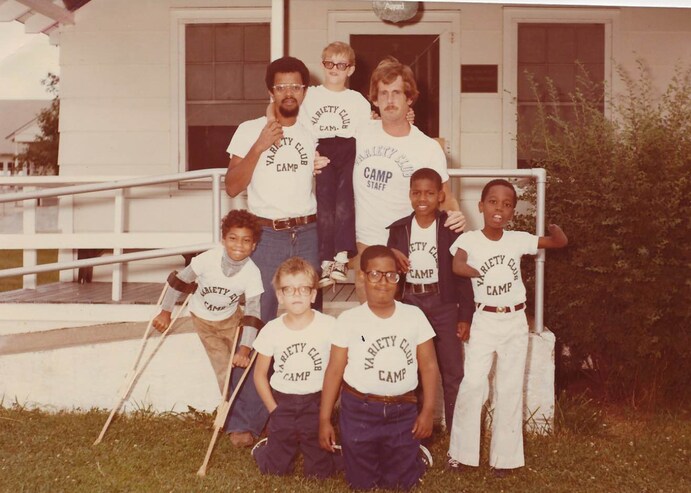
Additionally, his encounters with the children from diverse socio-economic and religious backgrounds at Variety Club Camp for Handicapped Children allowed him to write intricately about Dodo. When McBride met the Camp Director Sy Friend in 1970s, he noticed Friend’s commitment to inclusivity long before it became fashionable. McBride cleverly used this as his foundation and weaved a story together.
Apart from the plot and the philosophy of Tikkum Olam, the author examines a third layer in this work of fiction—the town of Chicken Hill when it was an industrious society before suburbanization changed its character. He hopes his novel inspires readers to draw cultural parallels between the book and their lives and notice that our commonalities far outweigh our differences.
Writing Style
As a reader, I aim to defy favoritism and read books written by diverse authors on matters I do not know much about to expand my horizons and perceptiveness. I also read to improve my vocabulary and grasp of the language. This book not only served that purpose but also introduced me to Yiddish and African-American Vernacular English.
The book is a complex narrative with numerous complex characters, meandering plots, and subplots. As a working woman with a stressful job, the narration style did not sit well with me. Sometimes, I wanted to stay focused on the main character, but McBride would introduce side characters in the next chapter and run a parallel plot in the alternate chapters. Eventually, the entire story would come together, but it tested my patience a little at the time. I still do not understand the significance of some characters, but after finishing the book, I can appreciate his narration style and the rationale behind it.
My favorite aspect of McBride’s multifaceted writing is his unique ability to bring such a complex story with an array of diverse and flawed characters to life without making it emotionally draining for the readers.
End Notes
The book has garnered several prestigious awards, including the 2023 Kirkus Prize for Fiction and the 2024 Jewish Fiction Award. When I would share the synopsis of this book with friends, the unanimous response would be… ‘sounds like a movie.’ And sure enough, I was not surprised to find Steven Spielberg’s initiative to work on the cinematic adaptation of the book.
I hope this article acts as a primer for the readers and inspires them to give this book a try. It has definitely encouraged me to examine my local history with rose coloured glasses tikkum olam glasses.

 Contemporology
Very Empathetic approach 👍
and nice perception about rose colour glasses Vs Tikkum olum Glasses
very well insightful explanation, Aditi 👏👏
keep going , much appreciated
God Bless
LikeLiked by 1 person