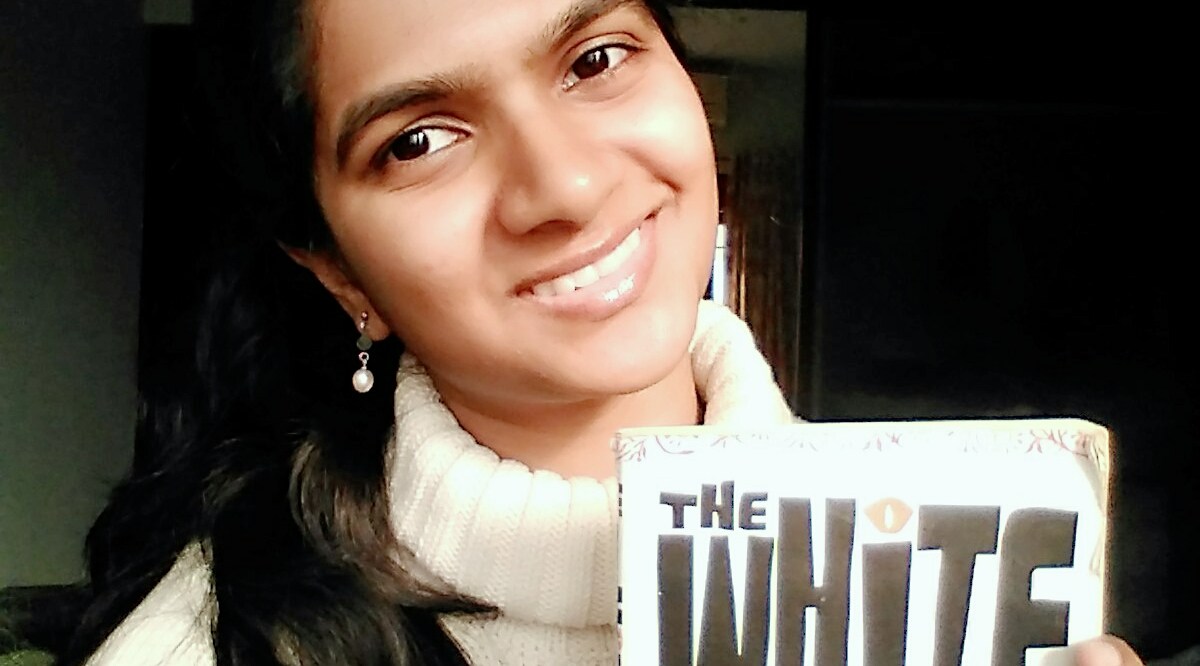
There are different kinds of fiction books. I know about two varieties now. Type-A is realistic fiction throughout; reading them feels like living them, for example, War & Peace (https://goo.gl/BimFhn). Type B deals with real subjects and scenarios but is evidently fiction. Both varieties are inspired by real-life events that have profoundly impacted the author, and the author has also chosen to write about them. The White Tiger is Type B.
It is Arvinda Adiga’s first book, published in 2008 and also the winner of the Man Booker Prize (2008). This book is about India through the eyes of an underprivileged village boy who eventually becomes “a man.” (How intriguing!) It is not just a rags-to-riches story but also portrays the differences between the rich and the poor, their perspectives, attitudes, ambitions and….ethics. No! Certainly not!
I don’t know about the author, but the protagonist is undoubtedly an angry (and sarcastic) young man. This angry young man, a.k.a. Balram Halwai (Halwai being a sweetmaker “caste” in India), explores castism and classism in Modern India. Balram Halwai is caught between his necessity to be a faithful servant and his instinct to live up to his father’s dream of- being a man.
This book is also a realistic (not accurate) description (as far as I know) of the master-servant relationship and also the servant-servant relationship in India, glimpses of life and governance in villages and mega-cities (of India, of course). An independent India that has not yet freed itself of its past.
The book is not to be read for its literary merit but metaphorical merit. Everything written in a book has two meanings- one literal and another what you can interpret. The book is like a thought-provoking pop song; it’s easy listening yet profound. If you read it literally, then it is simply grotesque (and morally deceptive, at least according to me); however, if you read between the lines and understand the symbolic meaning, then it turns into something meaningful. The reader needs to know when to take what literally or metaphorically.
The narration is darkly sarcastic and witty. (I’ve never read a book more scathing than this one.) The world through the eyes of Balram Halwai is intriguing. Once you start reading, you’ll finish it within a blink of an eye.
Favourite quotes
The dreams of the rich, and the dreams of the poor- they never overlap do they?
See, the poor dream all their lives of getting enough to eat and looking like rich. And what do the rich dream of? Losing weight and looking like the poor.
You were looking for the key for years, but the door was always open.
The moment you recognize what is beautiful in this world, you stop being a slave.
Fact or fiction?
The White Tiger compels me to think- Does it require a person to do immoral or illegal things to climb up the ladder? In the book, Balram Halwai murders his employer (and it’s not a spoiler) to climb up the ladder and eventually does. And THAT…precisely makes this book a work of fiction (at least for me).
This is what I’ve learnt from the classic Crime and Punishment (https://goo.gl/NYsieg) that no matter how tempting, compelling or grotesque the circumstances are, one must choose virtue over vice because circumstances change and more importantly – as you sow, so shall you reap. If you do something wrong, its guilt will imprison you, even if the government cannot, and you shall suffer until and unless you redeem yourself by suffering for your misdeeds.
(Back to the point) Although the protagonist in this book is shown to have “morally suffered” for it, I’d still like to caution the readers not to get the wrong idea. I insist the readers look at the murder committed by Balram Halwai metaphorically, as in breaking of the shackles of time immemorial and ever-prevalent corruption, slavery, and class difference.
However, from the comfortable position of a reader, I agree with Balram Halwai’s inevitable metaphorical revolutionary murder, i.e. breaking away.
Lastly, the book is very simplistic, lacks human complexity and is metaphorical; it is suitable for light reading.
Ciao.


 Contemporology